
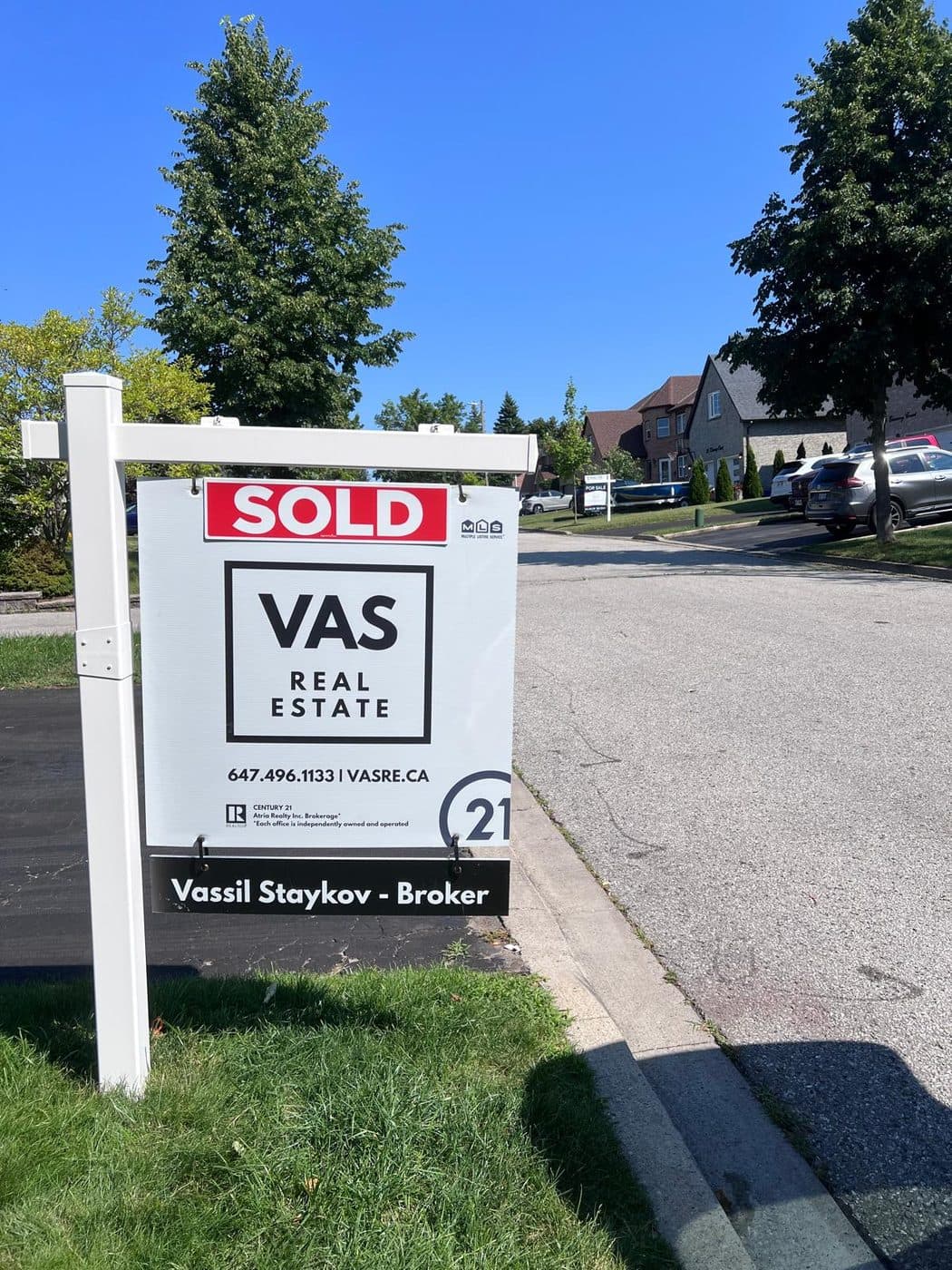
The short answer most people want: on a $1.2 million Markham home, the cost of selling is dominated by commission, and depending on the arrangement you choose it runs from roughly $35,000 at the low end to the low $80,000s at the high end, with HST included. A few thousand dollars more in legal, moving, and prep sit on top of that. The range is that wide because commission is negotiable. These are illustrative commission arrangements, not prescribed rates.
Here is what the commission looks like on that $1.2 million sale, with the 13% HST you pay on the whole fee built in:
- A $1,000 flat fee to list, plus 2.5% to the buyer's agent: about $31,000, or roughly $35,000 with HST.
- A 1% listing fee, plus 2.5% to the buyer's agent: about $42,000, or roughly $47,500 with HST.
- Full service at 2.5% to list, plus 2.5% to the buyer's agent: $60,000, or about $67,800 with HST.
At the higher end, a 3.5% listing side plus 2.5% to the buyer's agent is 6% total, which is $72,000, and with $9,360 of HST that comes to $81,360. That is where the low $80,000s figure comes from.
That HST line is the one that catches people off guard. You pay 13% on the entire commission, both sides, and on a full-service sale that tax alone is close to $8,000. Most sellers never have it explained until closing.
Not every sale requires the same level of service. Some sellers want me to manage everything from preparation and marketing through to closing. Others are comfortable handling certain parts themselves. I offer different service options depending on how involved you'd like me to be, and we'll discuss the costs upfront so you can decide what makes sense for your situation.
To put the whole thing together, here is an illustrative all-in example for a $1.2 million home sold on a full-service 5% arrangement. These are sample figures to show the shape of it, not standard fees:
- Commission (5% plus HST): $67,800
- Legal fees: $2,000
- Preparation and staging: $5,000
- Moving: $2,000
- Total: $76,800, before any mortgage penalty
On the legal side, expect roughly $1,500 to $3,000 for the work itself. That is separate from disbursements and adjustments, the smaller add-ons like title and software charges plus the property tax or utility amounts that get squared up on closing day.
If you are breaking a mortgage, there is a penalty, and it varies a lot. On a variable rate it is often three months of interest. On a fixed rate it is usually calculated as the greater of three months' interest or an interest rate differential. What you actually owe depends on your lender, the wording of your mortgage contract, and how much term is left, so the only reliable number is the one your lender gives you. Ask for a written payout statement before you list, not after you have an offer.
One tax note: if this is your home, the principal residence exemption generally means you owe nothing on the gain. If it is a rental or an investment property, you may trigger capital gains tax, and that is a conversation for your accountant before you list.
Then there is getting the house ready, and this is where I would spend with intention. Decluttering and depersonalizing cost almost nothing but time, and they move the needle more than most of the renovations people talk themselves into. What I consider non-negotiable is professional presentation: a home that is clean, properly prepared, and photographed well. Paid furniture staging is a separate question. On a large vacant detached house it can be the difference maker and run up toward $10,000. On an occupied townhouse that already shows well, it might just mean a stager editing what is there and adding a few pieces, and sometimes it is not needed at all. I have spent anywhere from about $2,000 to $10,000 depending on the house. The mistake is treating a few pieces of someone's spare furniture as if it were the same thing.
The last thing, and I will leave the full agent discussion for another article: the cheapest commission is not always the cheapest outcome. A lower fee often means a smaller marketing budget, less prep, and presentation that falls short. If you have sold a few times and know how to run the process, a low-fee or flat-fee model can work well. If you have not, what you saved on commission can quietly come back out of your final sale price.
It also helps to understand how the buyer side works now. Buyers today sign a representation agreement with their own agent that sets what that agent is owed. If the commission offered on a listing is less than that, the buyer may face a shortfall and have to cover the difference, depending on how their agreement is written. None of that is fixed, though. Buyer-side compensation can be negotiated as part of the deal, so it is worth discussing with your agent rather than assuming it one way or the other.
If you want a real number instead of a range, I am happy to put together an estimate for your specific house, your mortgage, and the prep it actually needs. That is a conversation, not a sales pitch.